
Guide: Check Whether Your Home Has Two Poorly Insulated Areas
A home has four structural components: walls, roof, floor, and windows. You can apply for a grant if at least two of these components are poorly insulated.
Only homes built before 1990 are eligible for this subsidy. The year of construction provides an initial indication of your home’s insulation. The table below shows, by year of construction, which parts of the building are typically poorly insulated. Homes built before 1990 usually have two poorly insulated parts if they have not been retrofitted with insulation.
| Year of Manufacture | Roof* | Attic-/ loft floor* | Floor & Ground | Windows, panels in window frames, and doors | Facade, including cavity wall |
| 2000 or later | ✓ | ✓ | ✓ | ✓ | ✓ |
| 1992–2000 | ✓ | ✓ | ✓ | X | ✓ |
| 1988–1992 | X | ✓ | ✓ | X | ✓ |
| 1975–1988 | X | ✓ | X | X | ✓ |
| Before 1975 | X | X | X | X | X |
✓ = The building component is adequately insulated
X = The building component is inadequately insulated. Subsidy available if two building components are poorly insulated.
Are there at least two "X"s next to your home? If so, your home likely has two poorly insulated sections. Were any sections retrofitted with insulation later on? If so, check to see if those sections are still poorly insulated.
Please note: The roof and the attic/loft floor are considered a single structural component. Does your attic have a permanent heating system? If so, check the insulation of the roof. Does your attic not have a permanent heating system? If so, check both the insulation of the attic/loft floor and that of the roof. If the attic floor is well-insulated and the roof is poorly insulated, this structural component is sufficiently insulated.
The table is a tool to help you determine whether your home has two poorly insulated sections.
Check it yourself
Are you unsure whether a building component is poorly insulated? Below, we explain how you can check this yourself for each building component.
The Roof
Your roof is poorly insulated if:
- There is no insulation material present.
- There is 9 centimeters or less of insulation material.
Your roof is adequately insulated if:
- The insulation material is thicker than 9 centimeters.
- The attic does not have a permanent heating system, and there is more than 5 centimeters of insulation on the attic floor.
If you have a permanent heating system in the attic, you only need to check the roof insulation. If you don't have a permanent heating system in the attic, you'll need to check both the roof and the attic/loft floor.
Here's how to check this
The video " " explains how to check this. We'll briefly explain it below.
Check the inside of the roof to see if you can spot any insulation material. You can do this, for example, behind a partition or near a vent pipe.
If you see insulation material, measure its thickness. You can do this with a knitting needle or a pen, for example. Carefully insert the knitting needle into the insulation material until you feel resistance.
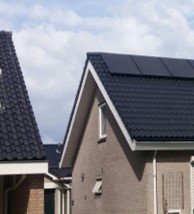
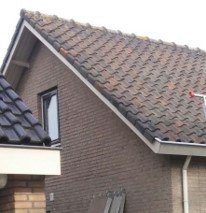
It’s also possible that insulation has been installed on the outside of the roof. You can check this by lifting up a roof tile. In older homes, you may also notice that the roof has been raised.
The Wall
Your wall is poorly insulated if:
- There is no cavity wall insulation;
- There is no insulation on the inside of the wall;
- There is no insulation on the outside of the wall.
Your wall is sufficiently insulated if:
- There is insulation material in the cavity, even if it's just a thin layer
- Insulation panels have been installed on the outside or inside of the wall
Here's how to check this
The video " " explains how to check this. We'll briefly explain it below.
Homes built before 1975 often lack insulation in the cavity walls.
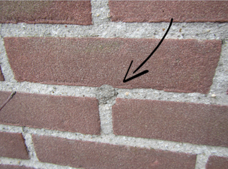
If they have been retrofitted with insulation, you will see (filled) holes in the joints on the outside.
It’s also possible that insulation panels have been installed against the exterior or interior wall. For walls thicker than 36 centimeters, there’s a good chance that insulation material has been added. You can check this by opening a window.
The floor on the ground floor
Your floor is poorly insulated if:
- No insulation material has been installed against the underside of the floor
- There is 5 centimeters or less of insulation material installed against the underside of the floor.
Your floor is sufficiently insulated if:
- There is more than 5 centimeters of insulation material near the floor.
- Hang heating pads under the floor
Here's how to check this
The video " " explains how to check this. We'll briefly explain it below.
Do you have a crawl space hatch? If so, look under the floor. Check to see if there is insulation and measure its thickness. You can do this, for example, with a knitting needle. Carefully insert it into the insulation until you feel resistance.
The glass
Glass is considered poorly insulated if:
- The single-pane glass is
- The double-pane glass is
- The HR glass is
Glass is considered well-insulated if:
- HR++ glass is
- HR+++ glass (triple-pane glass) is
Here's how to check this
The video " " explains how to check this. We'll briefly explain it below.
- Count the number of glass panes to determine if it is single-pane glass.
- Read the information on the aluminum strip on the side of the glass. You can use that information to look up the type of glass online.
- Hold a lit match next to the window. Look at the glass at an angle. You should now see four small flames. If thesecond orthird flame is a different color, you have HR++ glass. If all the flames are the same color, you have double-pane glass.
Are you having trouble figuring it out on your own?
Are you unsure whether your home has two poorly insulated sections, or are you having trouble figuring it out? An energy coach from Energiehuis Slim Wonen can work with you to assess your home’s insulation and explain possible improvements.